4BEAT Yoga: The Discipline of Breath
 By Cyro
 My very first class did nothing to change my mind. We spent most of the hour seated, tying ourselves into elaborate knots with our arms, and it only confirmed my skepticism. But injury has a way of narrowing your options, so rather than giving up, I signed up for a class marked experienced practitioners only, hoping at the very least to find something that looked more like a challenge. My relationship with effort has always been coloured by the belief that if something is difficult, it must be worth doing, and if I am not naturally good at it, then I should become good at it.
My ego spoke. So I walked into the room ready to prove something, though I couldn't really tell you what. What I found was not what I expected. It was not a room full of performers, but a room full of practitioners, and there is a big difference.
4BEAT x Flow State
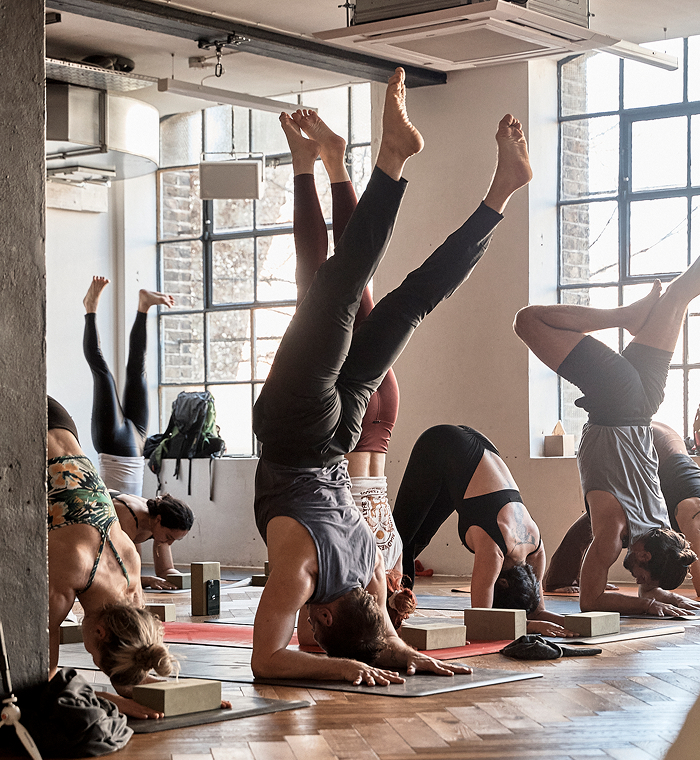
I watched bodies move with striking precision, but what held my attention was never flexibility or strength. It was control. Breath steady, gaze focused, movement synchronised. There was something almost hypnotic about the collective rhythm of the room, as though everybody had somehow tuned into the same internal frequency. I had absolutely no idea what I was doing, but I knew I wanted what they had.
At first, if I’m honest, what caught my eye was the circus of it all: inversions, pincha, arm balances, impressive transitions, the visible signs of mastery. My ego loves spectacle. It loves achievement. It loves what can be externally recognised. But the strange thing about ego is that, while it often points us towards shallow rewards, it can also keep us on the path long enough to discover deeper ones.
The good thing about both my ego and inversions - and that unexplainable urge to touch my toes - is that both forced me to stick to practice. And in staying, my reasons for practising changed.
I used to think yoga was about shapes. Now I understand it is about states.
Unsurprisingly, I used to not understand savasana either. Lying still at the end of class felt ceremonial at best, indulgent at worst. My conditioning had taught me that rest was laziness in disguise, that slowing down meant losing momentum, and that relaxation was something earned only once everything important was done, which, of course, meant it was never truly allowed.
Then, somewhere along the way, I discovered what savasana actually feels like: a deep release, the rare experience of a nervous system feeling safe enough to stop bracing. Not collapsing, not zoning out, but letting go. That feeling changed my understanding of yoga completely.
And 4BEAT became one of the clearest pathways I know to get there.
4BEAT x Breath
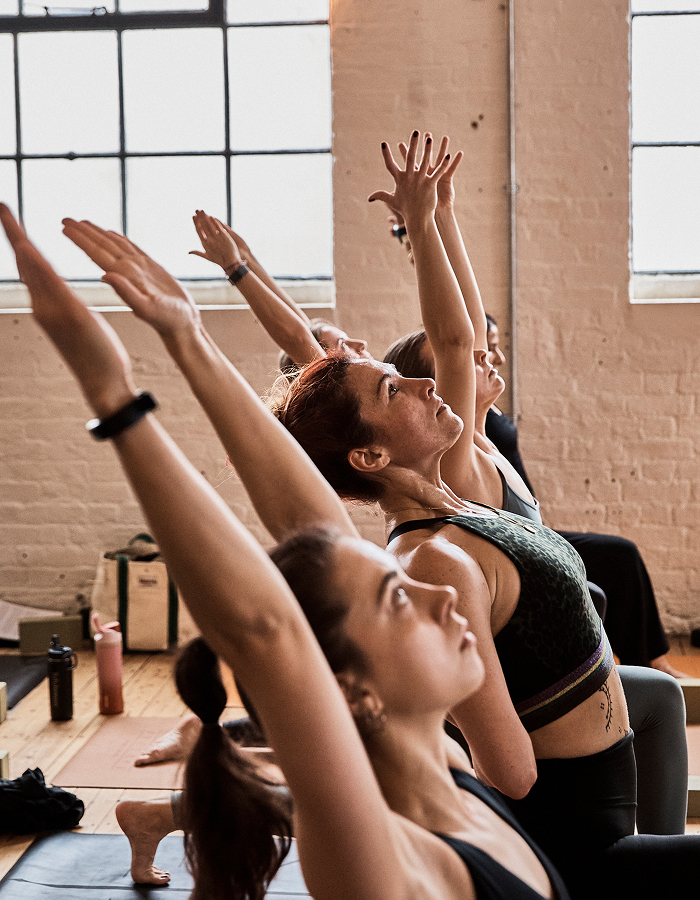
At its core, 4BEAT is built around a deceptively simple principle: breathe in for four counts, breathe out for four counts, and move without losing the breath. That’s it. And also, that’s everything.
The inhale creates space. The exhale creates depth. Inhale to lengthen, exhale to deepen - almost like hydraulic power - with both halves of the cycle carrying equal importance. One creates lift, the other creates grounding force. One expands, the other stabilises.
When breath stays central, movement stops being muscular choreography and becomes something far more interesting: an expression of rhythm, pressure, attention and control. The challenge is not to do the pose. The challenge is to keep the breath whilst doing the pose.
That distinction matters, because anyone can hold their breath, brace their body and power through discomfort to reach a shape. But what interests me more is not whether we can endure intensity, but how we choose to meet it. Do we contract around effort, or do we learn to soften inside it? Do we fight discomfort, or do we breathe through it? Whatever we choose, the shape may look the same from the outside, but the internal experience would be entirely different. And that internal experience matters as much as the outcome - if not more - because yoga was never really about arriving in the pose, but about what happens to us on the way there.
Control is keeping the breath smooth when effort rises. It is staying relaxed inside intensity. It is knowing how to create effort without creating unnecessary tension. In other words: grace. Not only showcasing some, but also giving ourselves some.
4BEAT x Music
From the outside, 4BEAT can look like a dynamic Vinyasa practice set to music. And yes, it shares some of that DNA. But what makes it distinct is the role rhythm plays in shaping effort. One of the most fascinating principles behind 4BEAT is that rhythm competes with fatigue. Not necessarily muscular fatigue - muscles will always tire - but the mental fatigue that makes effort feel heavier than it is.
Most exhaustion starts in attention. The mind begins negotiating: slow down, this is hard, skip the breath, come out early. Attention fragments, breath shortens, heart rate climbs, and suddenly effort feels chaotic. Rhythm interrupts that pattern. A steady beat gives the nervous system something predictable to organise around. Breath finds cadence. Attention has somewhere to land. Movement becomes more economical. Instead of leaking energy through resistance, the body starts working with itself rather than against itself.
Momentum creates stamina.
This isn’t mystical. It’s physiology. Slow rhythmic breathing is known to influence heart rate variability, improve vagal tone and help regulate the autonomic nervous system. Regular cadence also reduces cognitive load because fewer decisions are being made moment to moment. Repetition creates efficiency.
The body loves rhythm because life itself is rhythmic: heartbeat, breath, sleep cycles, hormones, walking, seasons, tides. We are rhythmic creatures trying to function in profoundly arrhythmic lives. It makes sense that practices rooted in cadence feel regulating: they restore coherence where modern life creates fragmentation.
4BEAT x Yoga
That said, I’m slightly cautious about how often yoga is now reduced to nervous system regulation, as though its highest purpose were simply to make us feel calmer. Regulation matters, deeply. It is often the first tangible thing people feel in practice, and feeling safe enough in our own body to soften, listen and trust is no small thing.
But yoga also asks bigger questions. How do we relate to ourselves? How do we relate to others? What habits are we reinforcing? Where does ego drive our choices? Where does fear contract us? What happens when we stop reacting automatically and start paying attention? Like most meaningful practices, yoga starts with something intimate - learning how to understand our own patterns - but it shouldn’t stop there.
The more aware we become of our own needs, the better we become at recognising the needs of others. The more we understand what regulation, balance and care feel like in our own system, the more capable we are of creating those conditions around us. In our relationships. In our communities. In the way we consume. In the way we inhabit this planet. That, to me, is what practising off the mat really means: behaving in coherence with what we know to be true.
Comments
Leave a comment.Fields marked with a * are compulsory. Your email won't be published.
Thanks, your comment has been posted successfully. It will be visible on the website once it's approved.
Google says you're a bot...